
When Do You Actually Need Antibiotics? An Australian Guide
At a Glance
Antibiotics only work against bacteria. They do nothing for viral infections like colds, flu, most sore throats, and acute bronchitis. Taking antibiotics when you do not need them fuels antibiotic resistance — one of Australia's most serious public health threats. For viral infections, OTC symptom relief, rest, and fluids are the evidence-based approach.
The Fundamental Rule: Bacteria vs Viruses
Antibiotics are medicines designed to kill or stop the growth of bacteria. They have absolutely no effect on viruses. This distinction matters because the overwhelming majority of common infections that send Australians to the GP — colds, sore throats, coughs, and flu — are viral.
When your GP says 'you don't need antibiotics for this,' they are not being dismissive. They are giving you evidence-based advice. Taking antibiotics for a viral infection will not make you feel better faster, will not prevent complications, and may cause side effects like diarrhoea, nausea, and thrush. Worse, it contributes to antibiotic resistance — making these medicines less effective for everyone.
Common Conditions That Do NOT Need Antibiotics
The following conditions are almost always viral. In the vast majority of cases, antibiotics will not help.
| Condition | Cause | Why Antibiotics Won't Help |
|---|---|---|
| Common cold | Rhinoviruses (200+ types) | Always viral. No antibiotic can treat it. |
| Influenza (flu) | Influenza A or B virus | Viral. Antiviral medication (prescription only, e.g. Tamiflu) is the drug treatment — not antibiotics. |
| Most sore throats | Viral in 85-90% of adult cases | Only strep throat (Group A Streptococcus) requires antibiotics, and that needs a test to confirm. |
| Acute bronchitis | Usually viral, follows a cold | Antibiotics do not shorten the duration or reduce severity. Cough may last 2-3 weeks regardless. |
| Runny nose / sinusitis (under 10 days) | Usually viral | Green or yellow mucus does NOT mean you need antibiotics. Colour reflects your immune response, not bacteria. |
| Most middle ear infections (adults) | Often viral or resolves on its own | Many ear infections clear without antibiotics. GPs use a 'watch and wait' approach for mild cases. |
| COVID-19 | SARS-CoV-2 virus | Viral. Antibiotics are only needed if a secondary bacterial infection develops. |
The Green Mucus Myth
One of the most persistent myths in Australia is that green or yellow mucus means a bacterial infection requiring antibiotics. This is not true. Mucus changes colour as your immune system fights the infection — it happens with viral infections too. The colour of your mucus alone is not a reliable indicator of whether you need antibiotics.
Conditions That DO Need Antibiotics
Some infections are genuinely bacterial and require antibiotic treatment. Your GP will determine this through examination, symptoms, and sometimes testing.
| Condition | How Your GP Confirms It | Why Antibiotics Are Needed |
|---|---|---|
| Strep throat (Group A Strep) | Rapid antigen test or throat swab culture | Untreated strep can lead to rheumatic fever — a serious concern in Australia, especially for Aboriginal and Torres Strait Islander communities. |
| Urinary tract infection (UTI) | Urine test (dipstick and/or culture) | UTIs are bacterial. Without antibiotics, the infection can spread to the kidneys. |
| Bacterial sinusitis | Symptoms lasting more than 10 days, or worsening after initial improvement | Only a small percentage of sinusitis cases are bacterial. Most resolve on their own. |
| Bacterial pneumonia | Chest X-ray, physical examination, blood tests | Bacterial pneumonia can be life-threatening without treatment. Prompt antibiotics are essential. |
| Cellulitis (skin infection) | Clinical examination of the affected skin | Spreading redness, warmth, and swelling indicate bacterial skin infection requiring treatment. |
| Some ear infections (especially in young children) | Otoscopic examination by GP | Children under 2, or those with severe symptoms, often need antibiotics for middle ear infections. |
| Infected wounds | Clinical examination — spreading redness, pus, fever | Wounds with signs of bacterial infection need treatment to prevent systemic spread. |
Rheumatic Fever Warning
Rheumatic fever, caused by untreated strep throat, remains a significant concern in Australia — particularly for Aboriginal and Torres Strait Islander peoples and those living in remote communities. If your GP diagnoses strep throat, completing the full course of antibiotics is critical to prevent this serious complication.
How to Tell If It's Viral or Bacterial
Honestly? You often cannot tell without a doctor. That is exactly why self-prescribing or pressuring your GP for antibiotics 'just in case' is a bad idea. However, some patterns can give you clues.
| Clue | More Likely Viral | May Be Bacterial |
|---|---|---|
| Onset | Gradual, over 1-3 days | Can be sudden and severe |
| Symptoms | Multiple — runny nose, cough, sneezing, mild sore throat | Often localised — severe throat pain, ear pain, one-sided sinus pain |
| Duration | Improving by day 7-10 | Not improving after 10 days, or gets worse after initially improving |
| Fever | Low-grade or absent | High (over 38.5 degrees C) and persistent for more than 3 days |
| Pattern | Gradually gets better | 'Double worsening' — starts improving then gets worse again |
The 'double worsening' pattern is one of the most reliable warning signs. If you had a cold that was improving and then you suddenly spike a fever or develop severe sinus pressure, that suggests a secondary bacterial infection has developed on top of the original virus. That is when antibiotics may genuinely be needed.
The Antibiotic Resistance Crisis in Australia
Antibiotic resistance occurs when bacteria evolve to survive the antibiotics designed to kill them. Every time antibiotics are used — whether appropriately or not — bacteria have an opportunity to develop resistance. The more unnecessarily we use antibiotics, the faster resistance spreads.
This is not a hypothetical future problem. It is happening now in Australia. According to the Australian Commission on Safety and Quality in Health Care, antibiotic-resistant infections already cause significant illness and death in Australian hospitals every year. The AURA (Antimicrobial Use and Resistance in Australia) Surveillance System has repeatedly found that Australia has among the highest rates of community antibiotic prescribing in the developed world.
Why This Matters to You Personally
Antibiotic resistance is not just a global problem — it is personal. If resistant bacteria become widespread, common infections like UTIs, pneumonia, and infected wounds become harder to treat. Surgical procedures become riskier. Chemotherapy patients become more vulnerable. Every unnecessary course of antibiotics makes this future more likely — for you, your family, and your community.
What Australia is doing about it
- •The Australian Government's National Antimicrobial Resistance Strategy (2020 and beyond) sets targets for reducing inappropriate prescribing.
- •The NPS MedicineWise campaign has run public awareness campaigns encouraging Australians to ask 'Do I really need antibiotics?'
- •Antimicrobial stewardship programs in Australian hospitals monitor and guide antibiotic use.
- •The TGA regulates antibiotic availability — all antibiotics in Australia require a prescription (unlike some countries where they are sold over the counter).
What you can do
- •Never pressure your GP for antibiotics. Trust their clinical judgement.
- •Never take leftover antibiotics from a previous illness or from someone else.
- •If prescribed antibiotics, take the full course as directed — even if you feel better early.
- •Ask your GP or pharmacist: 'Do I actually need antibiotics for this, or will it get better on its own?'
- •Get vaccinated. Flu vaccination and other immunisations prevent infections that can lead to secondary bacterial infections requiring antibiotics.
What to Use Instead: OTC Alternatives for Viral Infections
If your infection is viral, the goal is symptom relief while your body fights it off. Here are evidence-based OTC options available at Australian pharmacies.
Pain and fever
Paracetamol is the first-line choice for pain, headache, sore throat pain, and fever. Ibuprofen is an alternative when inflammation is a factor, such as with sinus pressure or severe sore throat. Both are effective, well-tolerated, and widely available.
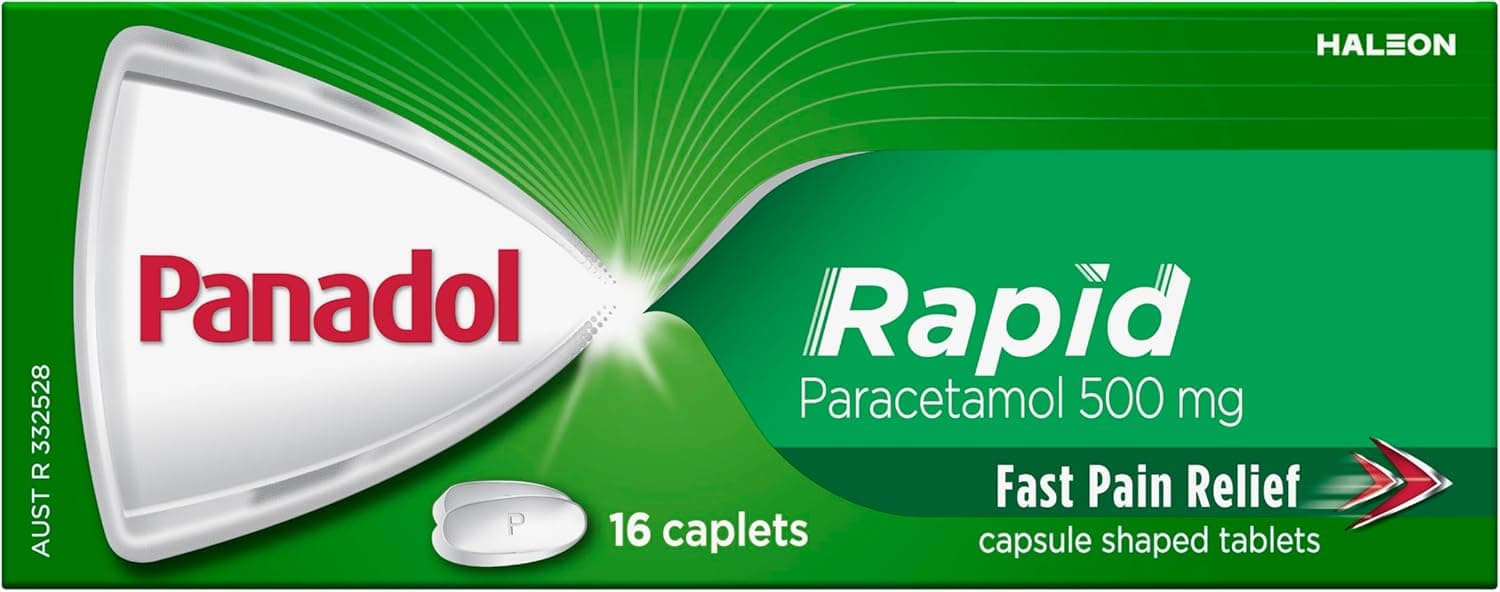
Panadol Rapid (Paracetamol 500mg)
Fast-acting pain relief. Gentle on the stomach. Suitable for headaches, fever, and general aches.


Nurofen (Ibuprofen 200mg)
Fast, effective pain relief with anti-inflammatory action. Ideal for period pain, back pain, and inflammation.
Nasal congestion and sinusitis
For a blocked nose, a decongestant containing pseudoephedrine (available behind the pharmacy counter) is the most effective OTC option. Saline nasal spray is a drug-free alternative that helps wash out mucus and can be used as often as needed. For ongoing sinus congestion, steam inhalation can provide temporary relief.
Sudafed Nasal Decongestant
Effective relief from nasal and sinus congestion caused by cold, flu, or allergies.
Fess Saline Nasal Spray
Non-medicated saline nasal spray to help relieve nasal and sinus congestion. Drug-free and suitable for daily use.
Sore throat
Most sore throats are viral and will resolve within a few days. In the meantime, medicated lozenges, anti-inflammatory throat sprays, and gargling solutions can provide meaningful symptom relief. Honey in warm water is a simple home remedy with some evidence behind it for soothing throat irritation.
Strepsils Sore Throat Lozenges
Medicated lozenges for temporary relief of sore throat pain and discomfort. Contains amylmetacresol and dichlorobenzyl alcohol.
Difflam Anti-inflammatory Throat Spray
Anti-inflammatory throat spray containing benzydamine for fast relief of sore throat pain and inflammation.
Sore Throat Gargle Ready To Use
Ready to use gargle for sore throat relief, killing bacteria and reducing discomfort.
Multi-symptom cold and flu relief
If you have several cold or flu symptoms at once, a combination cold and flu tablet can be convenient. These typically contain paracetamol, a decongestant, and sometimes an antihistamine for nighttime use. Be careful not to take extra paracetamol on top — always check the active ingredients on every product you are taking.
Codral Cold & Flu Day & Night
Day and night formula for relief from cold and flu symptoms including blocked nose, headache, and fever.
Simple Home Measures That Help
- •Rest. Your body needs energy to fight the infection.
- •Fluids. Water, diluted juice, clear broth, and warm drinks with honey help prevent dehydration and soothe symptoms.
- •Salt water gargle. Half a teaspoon of salt in a glass of warm water can temporarily ease sore throat pain.
- •Steam inhalation. Breathing in steam from a bowl of hot water (carefully) can help relieve nasal congestion.
- •Elevate your head at night. An extra pillow can help with post-nasal drip and congestion while sleeping.
- •Humidifier. Adding moisture to dry air may ease congestion and cough, especially in winter.
How to Talk to Your GP About Antibiotics
Research shows that many antibiotic prescriptions are driven not by clinical need but by patient expectations. Some GPs report feeling pressured by patients who arrive expecting a script. Having an open, informed conversation helps both of you.
Good questions to ask your GP
- •'Is this likely to be viral or bacterial?' — This shows you understand the difference and are not just asking for a script.
- •'Will antibiotics actually help me get better faster?' — For viral infections, the honest answer is no.
- •'What is the best way to manage my symptoms while this clears up?' — Your GP can recommend specific OTC products suited to you.
- •'What symptoms should bring me back?' — This is a smart question. It gives you a safety net without needing unnecessary antibiotics.
- •'Could this be a case for delayed prescribing?' — Some GPs offer a 'delayed prescription' that you only fill if symptoms worsen or do not improve after a few days. This reduces unnecessary antibiotic use while giving you peace of mind.
Delayed Prescribing
Delayed prescribing is a strategy used by Australian GPs where they write a prescription but advise you to wait 48-72 hours before filling it. If your symptoms improve (as most viral infections will), you do not fill the script. If they worsen, you have it ready. Studies show this approach significantly reduces antibiotic use without increasing complications.
When to See a Doctor
While most viral infections resolve on their own, there are genuine red flags that warrant a GP visit. Some of these may indicate a secondary bacterial infection that does require antibiotics.
See a GP If You Experience
- •Symptoms lasting more than 10 days without improvement
- •Symptoms that improve and then suddenly get worse (the 'double worsening' pattern)
- •High fever (above 38.5 degrees C) lasting more than 3 days
- •Severe, localised pain — ear pain, one-sided facial or sinus pain, or throat pain so severe you cannot swallow fluids
- •Difficulty breathing, chest pain, or shortness of breath
- •Stiff neck, confusion, or sensitivity to light (seek urgent medical attention — these may indicate meningitis)
- •Any symptoms in a baby or young child that concern you
Seek urgent medical attention if
- •You have difficulty breathing or are breathing rapidly
- •You cannot keep fluids down due to severe vomiting
- •You have a rash that does not fade when you press a glass against it
- •You feel confused or extremely drowsy
- •Your child has a febrile seizure
If You Are Prescribed Antibiotics: How to Take Them Properly
When your GP does prescribe antibiotics, using them correctly is essential for them to work — and to reduce the risk of resistance.
- •Take the full course as directed, even if you feel better before it is finished. Stopping early can leave surviving bacteria that are more resistant.
- •Take them at the right times. If it says 'three times daily,' space them roughly eight hours apart — not just at mealtimes.
- •Check if you should take them with food or on an empty stomach. This varies by antibiotic and affects absorption.
- •Do not share your antibiotics with anyone else. What was prescribed for you may be wrong for someone else.
- •Do not save leftover antibiotics for later. If you have completed the course and have tablets left, return them to your pharmacy for safe disposal.
- •Ask your pharmacist about interactions. Some antibiotics interact with other medicines, alcohol, dairy, or certain foods.
Return Unused Medicines
All Australian pharmacies accept unused or expired medicines for safe disposal through the Return Unwanted Medicines (RUM) Project. Do not flush antibiotics down the toilet or throw them in the bin — return them to your local pharmacy.
Frequently Asked Questions
My mucus is green — doesn't that mean I need antibiotics?
No. Green or yellow mucus is produced by your immune system's white blood cells fighting the infection. It happens with viral infections just as commonly as bacterial ones. Mucus colour alone is not a reliable way to determine whether you need antibiotics. If your symptoms have persisted for more than 10 days or are getting worse after initially improving, see your GP.
Can I buy antibiotics over the counter in Australia?
No. All oral antibiotics in Australia are prescription-only medicines (Schedule 4). You must see a GP or eligible health practitioner to get a prescription. Some topical antibiotic preparations (like antiseptic creams for minor cuts) are available without a prescription, but these are not the same as systemic antibiotics used for internal infections. This prescription requirement is an important safeguard against antibiotic resistance.
Will taking antibiotics 'just in case' prevent a bacterial infection from developing?
Generally no. Prescribing antibiotics preventively for a viral infection is not supported by evidence for most people. It does not reduce your risk of developing a secondary bacterial infection, but it does increase the risk of antibiotic side effects and resistance. There are specific medical situations where preventive antibiotics are appropriate (such as before certain surgeries), but your GP will make that call based on your individual circumstances.
I always get antibiotics for a sore throat — should I stop?
Most sore throats in adults are viral and will resolve within 3-7 days without antibiotics. The exception is strep throat (caused by Group A Streptococcus bacteria), which accounts for roughly 10-15 percent of adult sore throats. If your GP suspects strep, they can confirm with a rapid strep test or throat swab. If the test is positive, antibiotics are appropriate. If negative or not suspected, OTC pain relief and sore throat lozenges are the better option.
What is antimicrobial resistance and why should Australians care?
Antimicrobial resistance (AMR) occurs when bacteria, viruses, fungi, and parasites evolve to resist the medicines designed to kill them. Antibiotic resistance is the most well-known form of AMR. Australia has a particular responsibility because we are one of the highest per-capita users of antibiotics in the developed world. Without action, common infections and routine surgeries could become life-threatening within a generation. The Australian Government's AURA surveillance program monitors this threat and publishes regular reports on antimicrobial use and resistance nationally.
Should I take probiotics with antibiotics?
There is some evidence that certain probiotic strains may help reduce antibiotic-associated diarrhoea, which is one of the most common side effects of antibiotics. However, the evidence is not strong enough to make a blanket recommendation, and the best strain and dose are not settled. If you are interested, ask your pharmacist for a product containing Saccharomyces boulardii or Lactobacillus rhamnosus GG, which have the most research behind them. Take probiotics at a different time of day from your antibiotic dose.
Disclaimer
This article is for informational purposes only and does not constitute medical advice. Always read the label and follow the directions for use. If symptoms persist, talk to your health professional. See your pharmacist or GP for advice tailored to your situation.


