Guide
Thunderstorm Asthma: Symptoms, Risk and What to Do
Thunderstorm asthma can strike hay fever sufferers who've never had asthma. Learn the warning signs, pollen-season prep and 4x4x4 first aid.
Key takeaways
- Thunderstorm asthma is a sudden, sometimes severe asthma-like attack triggered when a storm sweeps through during grass pollen season. It can affect anyone with spring hay fever — even people who have never been diagnosed with asthma. If you get spring hay fever, the key steps are to stay indoors with windows shut before and during a storm, keep your hay fever treatment up during pollen season, and talk to your GP about whether you should carry a reliever inhaler. Any sudden wheezing, chest tightness or breathlessness means calling 000.
Call 000 immediately for these signs Thunderstorm asthma can escalate within minutes. Call Triple Zero (000) straight away if you or someone near you has:
- Sudden or severe difficulty breathing, gasping, or being unable to speak in full sentences
- Wheezing, a persistent cough, or a feeling of tightness in the chest that is getting worse
- Blue or grey lips or fingertips, or the person becoming pale, exhausted or confused
- Little or no improvement after following the 4x4x4 asthma first aid steps (see below)
- Any breathing difficulty in someone who has never had asthma — do not wait to see if it settles
What Is Thunderstorm Asthma?
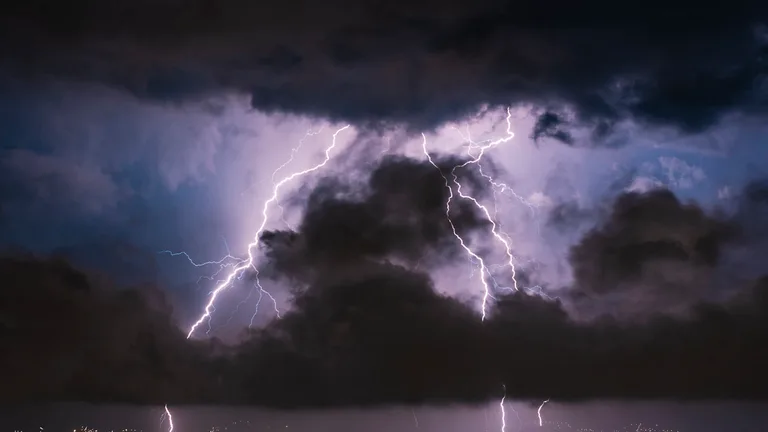
Thunderstorm asthma is a sudden outbreak of asthma-like symptoms — wheezing, coughing, chest tightness and breathlessness — that follows a thunderstorm during grass pollen season. On a normal high-pollen day, grass pollen grains are too big to get past your nose and throat, which is why they cause hay fever (sneezing, a runny nose and itchy eyes) rather than breathing problems. A thunderstorm changes that.
- As a storm builds, strong winds and updraughts sweep large amounts of grass pollen up into the clouds.
- Moisture and the storm's energy cause the pollen grains to absorb water and burst, or rupture, into hundreds of much smaller fragments.
- The storm's downdraughts then carry these tiny particles back down to ground level, right where people are breathing.
- Because the fragments are so small, they slip past the nose and throat and travel deep into the airways and lungs, where they can trigger a rapid asthma attack.
The trigger in Australia is overwhelmingly ryegrass (Lolium perenne) pollen — the most allergenic grass pollen in the country and the same one that drives the spring hay fever peak. This is why thunderstorm asthma is a spring and early-summer phenomenon, and why the grasslands north and west of cities like Melbourne make some regions especially high-risk.
Who Is at Risk?
The most important thing to understand about thunderstorm asthma is that you do not need a history of asthma to be affected. Many people caught out by these events have never had an asthma attack in their life. The common thread is springtime hay fever.
- People with spring hay fever (seasonal allergic rhinitis) — this is the single biggest risk group, whether or not they have ever had asthma.
- People who are allergic to ryegrass pollen in particular, which includes a large share of Australian hay fever sufferers.
- People with asthma, especially if it is not well controlled, or if it tends to flare up in spring.
- People who wheeze or feel tight in the chest after exercise or during high-pollen days, even if they have never been formally diagnosed.
- Anyone living in or visiting a high-risk area — inland and western parts of Victoria and other regions with extensive ryegrass pastures — during grass pollen season.
The key takeaway on risk If you sneeze, get a runny nose or itchy eyes every spring, you are in the at-risk group for thunderstorm asthma — even if you have never used an inhaler. That is the exact group most likely to be caught unprepared, so it is worth having a plan before the season starts.
Symptoms to Watch For
Thunderstorm asthma symptoms can come on within minutes to a couple of hours after a storm passes through. They are the classic symptoms of an asthma attack, and they can range from mild to life-threatening:
- Wheezing — a whistling sound when breathing, particularly when breathing out
- A persistent cough that does not settle
- Tightness or pain in the chest
- Shortness of breath, or feeling that you cannot get enough air
- Difficulty speaking in full sentences because you are too breathless
- In a severe attack: gasping for air, blue or grey lips, exhaustion, or confusion — these are medical emergencies
Don't dismiss it as "just hay fever" If your usual spring symptoms suddenly move from your nose and eyes into your chest — a cough, wheeze or breathlessness after a storm — treat that as a warning sign, not a nuisance. In someone with no asthma history it is easy to underestimate, but this is exactly how thunderstorm asthma catches people out. Follow the 4x4x4 first aid steps and call 000 if there is any severe breathing difficulty.
The 2016 Melbourne Event
On 21 November 2016, Melbourne experienced the world's most severe recorded thunderstorm asthma event. A powerful storm swept through the city during peak ryegrass pollen season, rupturing pollen into fine fragments across a densely populated area. Over roughly 30 hours, ambulance services and emergency departments were overwhelmed. More than 9,500 people were affected and taken to hospital, and 10 people died — many of whom had hay fever but had never been diagnosed with asthma.
The 2016 event reshaped how Australia prepares for these storms. It showed that thunderstorm asthma can strike quickly, on a mass scale, and hit people who had no reason to think they were vulnerable. Out of it came the warning and forecasting systems now in place, particularly in Victoria.
Warning Systems: How to Stay Informed
During grass pollen season, several Australian services help you see a high-risk day coming so you can prepare in advance rather than react in the moment:
- Epidemic thunderstorm asthma forecasts — the Victorian Department of Health issues these during grass pollen season, rating the risk (for example low, moderate or high) region by region. Sign up for alerts at health.vic.gov.au.
- VicEmergency — the Victorian warnings app and website broadcasts epidemic thunderstorm asthma warnings alongside other emergency alerts, so you can get a push notification on a high-risk day.
- Daily pollen counts — Melbourne University's AusPollen (Melbourne Pollen Count) and similar services in other states publish daily grass pollen forecasts through the season. Weather apps such as BOM Weather and Weatherzone often include pollen data too.
- Bureau of Meteorology (BOM) storm forecasts — checking whether thunderstorms are likely, and combining that with the pollen count, tells you when the risk is highest.
The risky combination to watch for The danger window is a thunderstorm arriving on a day with high grass pollen, during the October-to-December grass pollen season. If you see a high pollen count and storms forecast for the same afternoon, treat it as a day to stay indoors and keep your reliever close if you have one.
How to Prepare and Prevent It
You cannot control the weather, but you can lower your risk substantially by controlling your hay fever and having a plan for high-risk days. If you get spring hay fever, work through this checklist before pollen season starts.
Thunderstorm asthma preparation checklist Steps to take before and during grass pollen season if you get spring hay fever:
- See your GP before spring to talk about your risk — especially whether you should have a reliever inhaler on hand, even if you have never had asthma.
- Get your hay fever under control early. A corticosteroid nasal spray works best started a week or two before the season and used daily; a non-drowsy antihistamine helps with day-to-day symptoms.
- If you have been prescribed a preventer inhaler, use it exactly as directed throughout the season — preventers work by keeping your airways calm over time, not on the day.
- Check the pollen forecast and thunderstorm asthma forecast daily during spring, and sign up for VicEmergency or state alerts.
- On high-risk days, stay indoors before, during and for a while after any thunderstorm, with windows and doors closed and the air conditioner set to recirculate.
- Avoid being outside — especially exercising or gardening — when a storm is rolling in during grass pollen season.
- Know your first aid: make sure you and your household know the 4x4x4 steps below and where the reliever inhaler is kept.
Medicines and Access in Australia
Thunderstorm asthma preparation involves three different kinds of medicine, and it helps to understand what each one does and how you get it in Australia — because they sit at very different levels of access.
| Medicine | What it does | How you get it in Australia | Role in thunderstorm asthma |
|---|---|---|---|
Antihistamine tablets (e.g. fexofenadine/Telfast, cetirizine/Zyrtec, loratadine/Claratyne) | Ease hay fever symptoms — sneezing, runny nose, itchy eyes | General sale — supermarkets and pharmacies, no prescription | Help keep hay fever controlled through the season, but do not treat an asthma attack |
Corticosteroid nasal spray (e.g. Nasonex Allergy, Flixonase, Rhinocort) | Reduces nasal inflammation and congestion when used daily | Pharmacy medicine — ask your pharmacist; started early and used through the season | Better hay fever control may lower overall reactivity, but again does not treat an attack |
Reliever inhaler (salbutamol — e.g. Ventolin, Asmol) | Rapidly opens the airways during an asthma attack | Pharmacist Only (Schedule 3) — no prescription needed, but you must ask at the pharmacy counter | The medicine used in 4x4x4 first aid during an attack |
Preventer inhaler (inhaled corticosteroid, sometimes combined) | Calms airway inflammation over time to prevent attacks | Prescription only (Schedule 4) — prescribed and reviewed by your GP | Used daily through the season if prescribed; not an on-the-spot treatment |
Reliever inhalers without a script In Australia you can buy a salbutamol reliever inhaler (such as Ventolin or Asmol) from a pharmacy without a prescription, because it is a Pharmacist Only (Schedule 3) medicine. Your pharmacist will ask a few questions to make sure it is appropriate. A preventer inhaler is different — it is prescription-only and needs a GP. If you get spring hay fever, this is a good conversation to have with your GP or pharmacist well before the season.
Asthma First Aid: The 4x4x4 Steps
If someone is having an asthma attack — sudden wheezing, coughing, chest tightness or breathlessness after a storm — use the 4x4x4 asthma first aid method endorsed by Asthma Australia. It works even if the person has never been diagnosed with asthma, and it is safe to give reliever medication while you wait for help.
4x4x4 asthma first aid — and when to call 000 Follow these four steps. If the person is struggling to breathe, cannot speak, has blue or grey lips, or does not improve, call Triple Zero (000) for an ambulance without delay.
- Step 1 — Sit the person upright and stay calm and reassuring. Do not lie them down.
- Step 2 — Give 4 puffs of a blue or grey reliever inhaler (such as Ventolin or Asmol). Shake the puffer, put one puff into a spacer if you have one, and take 4 breaths from the spacer. Repeat for each of the 4 puffs.
- Step 3 — Wait 4 minutes. If there is no improvement, give 4 more puffs the same way.
- Step 4 — If there is still no improvement, call Triple Zero (000) for an ambulance. Keep giving 4 puffs every 4 minutes until help arrives.
Call 000 first if the attack is severe If the attack is severe from the start — the person cannot speak, is gasping, has blue lips, is becoming exhausted or confused, or is not breathing at all — call 000 immediately, then start the 4x4x4 steps while you wait. If a person with no history of asthma suddenly cannot breathe properly, do not wait to see if it settles.
Frequently Asked Questions
What are the symptoms of thunderstorm asthma?
Thunderstorm asthma causes classic asthma symptoms that come on suddenly during or after a storm in grass pollen season: wheezing, a persistent cough, chest tightness and shortness of breath. It often starts as your usual hay fever but then moves into your chest. In severe cases a person may gasp for air, be unable to speak in full sentences, or develop blue or grey lips — these are medical emergencies that need 000. If your spring symptoms suddenly affect your breathing, take it seriously.
Why does thunderstorm asthma affect Melbourne so badly?
Melbourne sits beside vast ryegrass pastures to its north and west, so it records some of the highest grass pollen counts in Australia during spring. Combine that with the city's changeable spring weather and frequent thunderstorms, and you have the exact recipe for thunderstorm asthma. That combination is why Melbourne experienced the world's most severe recorded event on 21 November 2016, when more than 9,500 people were hospitalised and 10 died. It is also why Victoria now runs a dedicated warning system.
How do I get thunderstorm asthma warnings in Victoria?
During grass pollen season the Victorian Department of Health issues epidemic thunderstorm asthma forecasts, rating the risk region by region — you can sign up for alerts at health.vic.gov.au. The VicEmergency app and website also broadcast thunderstorm asthma warnings alongside other emergency alerts, so you can get a notification on high-risk days. Checking the daily grass pollen count (for example the Melbourne Pollen Count) alongside the storm forecast gives you the fullest picture.
Can I get thunderstorm asthma if I've never had asthma?
Yes — and this is the most important thing to know. You do not need a history of asthma to be affected. The main risk factor is spring hay fever, particularly a ryegrass pollen allergy. Many people caught out in past events, including the 2016 Melbourne event, had never been diagnosed with asthma. If you sneeze and get a runny nose or itchy eyes every spring, you are in the at-risk group, and it is worth talking to your GP before the season about whether you should have a reliever inhaler on hand.
What should I do during a thunderstorm asthma warning?
If a high-risk day is forecast, stay indoors before, during and for a while after any thunderstorm, with windows and doors closed and the air conditioner set to recirculate. Keep taking your hay fever treatment, use your preventer inhaler if you have been prescribed one, and keep a reliever inhaler within reach. Avoid being outside — especially exercising or gardening — as the storm rolls in. If you develop sudden wheezing, coughing or breathlessness, start the 4x4x4 first aid steps and call 000 if there is no improvement or the attack is severe.
Can I buy a reliever inhaler without a prescription in Australia?
Yes. A salbutamol reliever inhaler (such as Ventolin or Asmol) is a Pharmacist Only (Schedule 3) medicine, so you can buy one from a pharmacy without a prescription — you just ask at the counter, and the pharmacist will check a few things first. A preventer inhaler is different: it is prescription-only and needs to be prescribed and reviewed by a GP. If you get spring hay fever and are worried about thunderstorm asthma, speak to your pharmacist or GP well before the season starts.
Disclaimer This article is for informational purposes only and does not constitute medical advice. Always read the label and follow the directions for use. If symptoms persist, talk to your health professional. See your pharmacist or GP for advice tailored to your situation.
The verdict
Thunderstorm asthma is a real and sometimes life-threatening risk for anyone with spring hay fever in Australia — you do not need a history of asthma to be affected. The best protection is to control your hay fever through the October-to-December grass pollen season, stay indoors with windows shut before and during storms on high-risk days, and sign up for epidemic thunderstorm asthma warnings via the Victorian Department of Health and VicEmergency. Talk to your GP before spring about whether you should carry a salbutamol reliever inhaler, which you can also buy from a pharmacist without a prescription. Learn the 4x4x4 first aid steps, and never hesitate to call 000 for sudden or severe breathing difficulty.
Related health topics
Medical disclaimer
This information is general in nature and isn’t a substitute for professional medical advice. Always read the label and follow the directions for use. Talk to your pharmacist or doctor about what’s right for you.
More Allergy & hayfever guides

Allergy & hayfever12 min read
Hay Fever Treatment Australia: Complete Guide (2026)
Antihistamines, nasal sprays or eye drops — what suits your symptoms? Covers AU pollen season by region, thunderstorm asthma, kids, pregnancy and GP advice.

Allergy & hayfever14 min read
Best Antihistamine Australia: Zyrtec vs Telfast vs Claratyne (2026)
Zyrtec vs Telfast vs Claratyne? We compare cetirizine, fexofenadine, and loratadine on drowsiness, onset, price, and which may help relieve your symptoms.

Allergy & hayfever13 min read
Best Hayfever Nasal Spray Australia (2026): Nasonex, Flixonase & Dymista
Compare Australia's best corticosteroid, antihistamine and combination nasal sprays — Nasonex, Flixonase, Rhinocort, Dymista — with how-to tips.